Choosing an ACL surgeon in Parel requires more than an MRI report, a sports-medicine label, or a promise of fast recovery. You will be able to judge whether surgery is appropriate, compare graft and hospital arrangements, and prepare focused questions before you book an appointment.
Key takeaways
- Seek ACL assessment after rapid swelling, a pop, giving way, or loss of extension.
- Choose reconstruction when instability, sport demands, or associated damage outweigh rehabilitation alone.
- Compare surgeon experience, MRI review, graft advice, hospital access, and rehabilitation planning.
- Judge surgery by restored stability, strength, movement, and return-to-activity progress.
How to Tell Whether a Knee Injury Needs an ACL Assessment
A knee that gives way, produces a pop, swells within a few hours, or cannot fully straighten after a pivot, landing, collision, or sudden stop needs prompt ACL assessment. Do not wait for pain to disappear before seeking evaluation; instability can cause further meniscus or cartilage damage.
- Describe the injury and symptoms: the direction of the twist or impact, when swelling began, whether the knee buckled, and whether you can bear weight. A cold foot, numbness, an obvious deformity, or severe instability requires urgent care because blood-vessel, nerve, or multiple-ligament injury is possible.
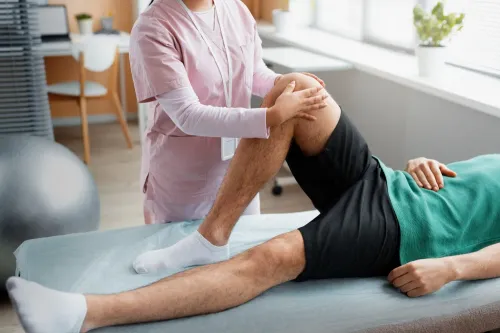
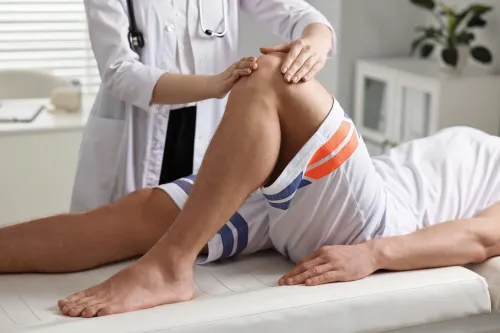
- Expect a physical examination. The clinician compares both knees and checks range of motion, tenderness, effusion, and stability with the Lachman, anterior-drawer, and pivot-shift tests. They also examine the posterior cruciate ligament, medial and lateral collateral ligaments, menisci, pulses, and nerve function.
- Use imaging to answer specific questions. X-rays identify fracture or dislocation; MRI shows the ACL and associated meniscus, cartilage, PCL, collateral, or posterolateral-corner damage. An MRI does not replace the examination, and a normal early scan does not explain persistent giving-way without clinical review.
If you are consulting an ACL reconstruction doctor in Parel, ask whether the injury is isolated or multiligament. A partial tear without recurrent giving-way may suit rehabilitation and monitoring, while recurrent instability, pivoting-sport demands, meniscal injury, or combined ligament trauma warrants a detailed surgical discussion.
When Reconstruction Is Better Than Rehabilitation Alone
A torn ACL does not automatically require reconstruction. Structured physiotherapy, activity modification, and observation are reasonable when the tear is partial or the knee remains stable, you do not experience giving-way, and your activities do not involve frequent pivoting, cutting, or jumping.
A brace can support selected activities, but it cannot restore a completely torn ligament.
| Option | What it means | When it applies |
|---|---|---|
| Observation | Clinical review with strength and stability monitoring | Stable knee, low-demand activity, no recurrent giving-way |
| Physiotherapy | Swelling control, full extension, quadriceps strength, balance, and progressive loading | Partial tear or coping well without instability |
| Bracing and modification | Reduce pivoting, jumping, and unstable-surface activity; use a prescribed brace | Temporary protection or selected activities while strength improves |
| Reconstruction | Arthroscopic ligament replacement followed by structured rehabilitation | Recurrent instability, high-demand pivoting activity, or associated injuries |
Early surgery becomes more reasonable after repeated giving-way, when you plan to return to football, basketball, kabaddi, skiing, or pivot-heavy work, or when the injury includes a repairable meniscal tear or multiple ligaments. A displaced meniscal tear that blocks extension needs prompt orthopaedic assessment because delaying treatment can change the repair options.
An enquiry for ACL PCL reconstruction in Mumbai is not a routine isolated-ACL booking. The surgeon should assess the PCL, collateral ligaments, pulses, and nerve function, then explain whether combined or staged reconstruction is appropriate. Ask how meniscus treatment would change weight-bearing, knee-flexion limits, and rehabilitation before choosing surgery.
How to Compare an ACL Surgeon and Parel Clinic Before Booking
Treat “best acl reconstruction for doctor in parel” as a search phrase, not proof of quality. Before you book an ACL reconstruction surgeon, verify current registration with the Maharashtra Medical Council or National Medical Commission, ACL-specific arthroscopy experience, hospital operating privileges, and complication, infection, stiffness, and reoperation data.
Ask for these details in writing:
- The proposed graft: patellar tendon, hamstring, quadriceps tendon, or another option.
- The fixation method and why it suits your bone, sport, and graft.
- Whether MRI or examination findings suggest meniscus, cartilage, PCL, or collateral-ligament treatment.
- Expected hospital stay, pain plan, weight-bearing limits, and the physiotherapist who will supervise rehabilitation.
- Follow-up dates and the plan if instability, limited extension, or stiffness continues.
| Check | Evidence to verify | Warning sign |
|---|---|---|
| Surgeon | Recent ACL case volume and documented outcomes | Only a general “sports specialist” label |
| Hospital | Arthroscopy facilities, anaesthesia cover, and emergency support | No clear operating privileges |
| Meniscus plan | Repair versus partial meniscectomy, with different restrictions explained | One fixed recovery promise |
| Rehabilitation | Swelling control, full extension, strength, balance, and sport-specific progression | Calendar-only return advice |
| Return-to-sport testing | Limb symmetry, hop tests, strength, movement quality, stability, and psychological readiness | Clearance based only on six months |
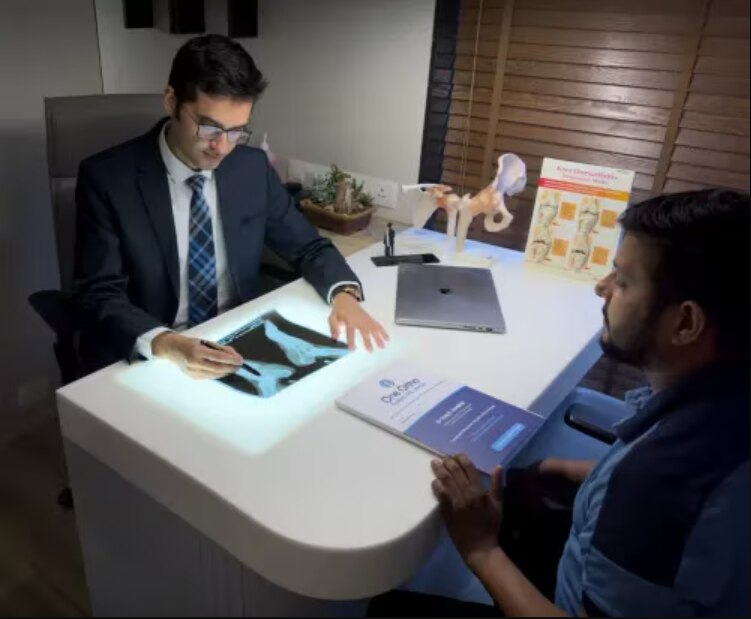
One Ortho Clinic is worth assessing by these same standards, especially its access to structured physiotherapy and follow-up. A typical unrestricted return takes roughly six to twelve months, but testing—not the calendar—should decide readiness.
An “ACL PCL reconstruction in Mumbai” enquiry requires a documented multiligament assessment, including pulses, nerve function, and whether reconstruction should be combined or staged.
Related services
ACL & PCL Reconstruction by Dr. Viraj Gandbhir ACL (Anterior Cruciate Ligament) and PCL (Posterior Cruciate Ligament) injuries are common knee ligament injuries that can lead... View service → |
Ligament Reconstruction by Dr. Viraj Gandbhir Ligament injuries, especially in the knee and shoulder, can lead to instability, pain, and difficulty in performing daily or... View service → |
Graft Choices and What Happens During Arthroscopic Reconstruction
The graft is not a one-size-fits-all choice. ACL reconstruction graft options trade harvest-site symptoms, fixation strength, muscle effects, healing time, and reinjury risk.
| Option | Main features | Key trade-off |
|---|---|---|
| Patellar-tendon autograft | Bone plugs allow strong bone-to-bone fixation | More anterior-knee pain and kneeling discomfort |
| Hamstring autograft | Avoids patellar-tendon harvest and kneeling pain | Hamstring weakness and soft-tissue fixation require attention |
| Quadriceps-tendon autograft | Thick graft with less disruption to the patellar tendon | Front-of-knee symptoms and quadriceps weakness can affect early rehabilitation |
| Allograft | Donor tissue avoids graft-harvest pain | Incorporation is slower, and failure risk is a concern for young, high-demand patients |
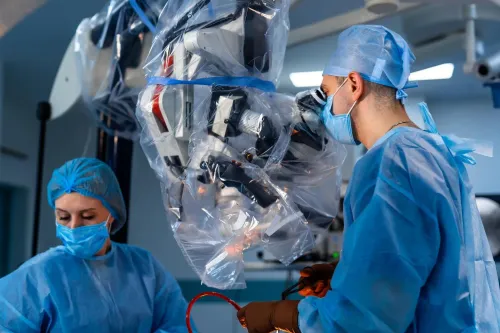
During arthroscopic ACL reconstruction, the surgeon inspects the joint through small portals, identifies the ACL’s femoral and tibial attachment footprints, and drills tunnels in those positions. Incorrect tunnel angle or placement can leave the knee unstable or restrict movement.
The graft passes through the tunnels, is tensioned, and is secured with devices such as interference screws, cortical buttons, or cross-pins; the surgeon then checks stability and range of motion.
A meniscus tear may be repaired when the tissue can heal, or trimmed only when damaged tissue cannot be preserved. Cartilage defects may receive smoothing, fixation, or a restorative procedure based on their size and depth. Ask for the planned graft, fixation method, and meniscus or cartilage treatment in writing.
Reconstruction restores stability but cannot guarantee prevention of later post-traumatic arthritis.
How Recovery Determines Whether Surgery Was a Good Choice
A good result in ACL reconstruction recovery is measured by function, not by the calendar. Early progress means controlling swelling, regaining full knee extension, restoring flexion, and activating the quadriceps without a lag.
Use these milestones before increasing activity:
- Begin running only when walking is pain-free, swelling does not return, full movement is restored, and strength and single-leg control are close to the uninjured side.
- Resume pivoting sport only after passing objective strength, hop, balance, landing, and change-of-direction tests, with no giving-way and enough confidence to react under pressure.
- Return to desk work when pain and concentration allow it; delay kneeling, climbing, lifting, or prolonged standing until those duties match your strength and control.
- Resume unrestricted activity when the knee remains stable during sport-specific loading, strength is adequately symmetrical, and your surgeon and physiotherapist agree that testing supports the decision.
Six to twelve months is a common guide for unrestricted sport, not a clearance date. Returning early because the knee feels better can expose a weak quadriceps or poor landing mechanics and increase reinjury concern.
ACL PCL reconstruction rehabilitation usually takes longer and follows a more protected progression than isolated ACL treatment. A repaired meniscus can also restrict weight-bearing or knee flexion, changing the schedule.
Long-term success means a stable, useful knee for work and chosen activities, not a guarantee of identical performance or prevention of later arthritis. Persistent swelling, loss of extension, pain, or instability deserves reassessment rather than forced progression.
Frequently asked questions
When does a knee injury need an ACL assessment?
Arrange prompt assessment after a pivot, landing, collision, or sudden stop causes a pop, rapid swelling, giving way, inability to fully straighten, or persistent instability. Examination and MRI help identify ACL, meniscus, cartilage, or other ligament damage.
When is ACL reconstruction better than rehabilitation alone?
Reconstruction is more suitable when the knee repeatedly gives way, you want to return to pivoting sports or demanding work, or the injury includes repairable meniscus or multiple-ligament damage. A stable knee with lower activity demands may be managed with structured rehabilitation.
How should you compare an ACL surgeon and Parel clinic?
Ask who will perform the operation, how the MRI and physical examination support the diagnosis, which grafts are appropriate, where surgery occurs, how complications are handled, and who supervises physiotherapy. Request a written recovery and follow-up plan before booking.
What graft choices are used in ACL reconstruction?
Common options include hamstring tendon, patellar tendon, quadriceps tendon, and donor tissue. The choice depends on age, sport, work, previous surgery, knee anatomy, and associated injuries; ask the surgeon to explain the trade-offs for your goals.
How long does recovery take after arthroscopic ACL reconstruction?
Recovery is staged rather than defined by a single date. Early goals include controlling swelling, restoring full extension, and activating the quadriceps; later stages rebuild strength, balance, running capacity, and sport-specific movement. Return to sport requires objective testing and surgeon and physiotherapist clearance.
Related service
Sports Injury Surgeries by Dr. Viraj Gandbhir Sports injuries can affect joints, ligaments, tendons, and muscles, often leading to pain, instability, and reduced... View service → |
Keywords